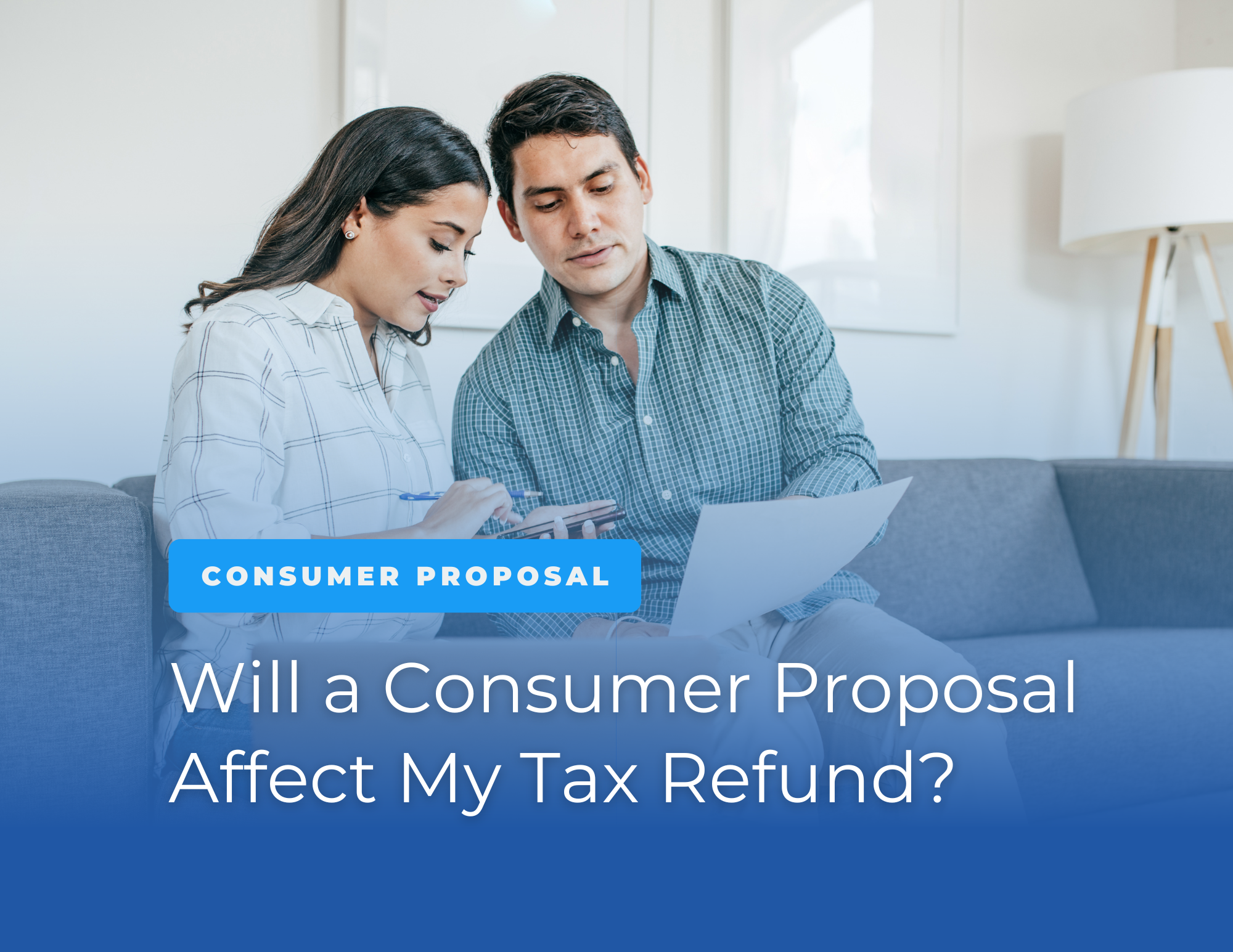
Will a Consumer Proposal Affect My Tax Refund in Canada?
Worried about losing your tax refund if you file a consumer proposal in Ontario? Learn how CRA set-off rules work and when refunds may or may not be affected.
What Ontarians Need to Know
Tax season often brings a sense of relief, especially if you are expecting a refund. For many
Ontarians, that refund helps cover essential expenses, reduce debt, or rebuild savings.
If you are considering a consumer proposal, or you have already filed one, it is natural to ask:
“Will I lose my tax refund?”
The answer depends on timing, whether you owe the Canada Revenue Agency (CRA), and how your proposal is structured. A consumer proposal does not automatically eliminate your right to receive a refund, but there are situations where the CRA may apply that refund toward outstanding tax debt.
Understanding how this works before filing can prevent surprises.
The Role of Tax Debt in a Consumer Proposal
A consumer proposal is a formal debt settlement administered by a Licensed Insolvency Trustee under the Bankruptcy and Insolvency Act. It allows you to reduce unsecured debt and repay a portion of what you owe over a period of up to five years.
Tax debt owed to the CRA is considered unsecured debt and can be included in a consumer proposal. Once the proposal is accepted by your creditors, including the CRA, collection activity stops and interest freezes.
However, the CRA has certain statutory rights that differ from ordinary creditors. One of those rights is called set-off.
What Is CRA Set-Off and Why Does It Matter?
Set-off is the legal right of the CRA to apply money it owes you, such as a tax refund, against money you owe them.
This is where confusion often arises.
A consumer proposal does not mean the CRA automatically takes your refund. But if you owe back taxes and are expecting a refund for a period connected to that debt, the CRA may apply that refund against the balance.
This is not a penalty. It is simply how tax law interacts with insolvency law.
Timing Makes a Significant Difference
The treatment of your tax refund often depends on when the refund relates to and when the proposal was filed.
If you are owed a refund for a tax year that occurred before filing your consumer proposal, and you had tax debt outstanding for that period, the CRA may apply the refund to the pre-proposal balance.
If you file your consumer proposal during the year and later receive a refund for that same year, the CRA may allocate portions of the refund based on income earned before and after the filing date.
For future tax years after the proposal has been filed, the situation is generally more straightforward. If you remain current with your tax obligations and do not incur new tax debt, future refunds are typically yours to keep.
This is why planning the timing of your filing and tax return submission is often part of a broader discussion with your Trustee.
Does a Consumer Proposal Automatically Seize Refunds?
No. Unlike bankruptcy, where certain tax refunds may be assigned to the estate, a consumer proposal does not automatically require you to surrender future tax refunds.
The key factor is whether the CRA has outstanding debt to offset.
If you do not owe the CRA at the time of filing, and you are entitled to a refund, there is generally no reason for the CRA to retain it.
What About GST/HST Credits and Other Government Benefits?
GST/HST credits and similar income-tested benefits are not typically included in a consumer proposal. These benefits are intended to support low- and modest-income individuals and families.
In most cases, you will continue receiving GST/HST credits during your proposal, provided you remain eligible.
However, if new tax debt arises and remains unpaid, the CRA may apply certain credits toward that new balance.
Remaining current with tax filings and payments during your proposal is essential.
Filing Taxes Before or After a Consumer Proposal
In some situations, filing your tax return before submitting a consumer proposal may allow you to receive a refund before any set-off issues arise.
In other cases, where significant tax debt exists, timing may not change the ultimate outcome.
This is highly case-specific. A Licensed Insolvency Trustee reviews:
- The amount of tax debt owed
- The tax years involved
- Whether returns are outstanding
- Whether a refund is expected
Strategic timing can sometimes protect funds, but it should never be done without proper advice.
After Your Proposal Is Accepted
Once your consumer proposal is in place, you are required to:
- Stay current with new tax filings
- Pay any new tax obligations when due
New tax debt incurred after filing is not included in your existing proposal. If you fall behind again, the CRA may apply future refunds toward those new balances.
Completion of your proposal does not restrict future refunds unless new debt exists.
The Bigger Picture: Planning Prevents Surprises
Concerns about losing a tax refund are valid, especially if you rely on that money.
However, in most consumer proposals, refunds are not automatically lost. The determining factor is whether there is existing CRA debt that triggers set-off rights.
The most important step is transparency and planning. Reviewing your tax situation before filing ensures you understand what to expect.
Frequently Asked Questions
Will I automatically lose my tax refund if I file a consumer proposal?
No. Refunds are only at risk if the CRA has outstanding tax debt to offset.
Is this different from bankruptcy?
Yes. In bankruptcy, certain tax refunds may be assigned to the estate. In a consumer proposal, refunds are not automatically surrendered.
Can I still receive GST/HST credits during a consumer proposal?
In most cases, yes — as long as you remain eligible and do not incur new unpaid tax debt.
Should I file my taxes before filing a proposal?
Possibly. The answer depends on whether you owe taxes and whether a refund is expected. Your Trustee can advise based on your situation.
Final Thoughts
A consumer proposal does not automatically eliminate your tax refund. Whether the CRA retains a refund depends on existing tax debt, timing, and your ongoing compliance with tax obligations.
The interaction between tax law and insolvency law can be technical, but with proper planning, there are rarely surprises.
If you are considering a consumer proposal and have concerns about your tax refund, reviewing your situation with a Licensed Insolvency Trustee before filing can provide clarity and confidence.
Book your free consultation today.** **Let us help you reduce debt, legally, safely, and permanently.
Disclaimer:
This article is intended for informational purposes only and does not constitute legal or financial advice. For personalized assistance, contact a Licensed Insolvency Trustee in your area.